While 2025 confirmed the loss of the 1.5°C target, 2026 is emerging as the breakthrough year for climate technology. With $1 trillion+ in climate tech investment and several technologies reaching commercial viability, innovation is our best hope for managing the climate crisis.
Why 2026 is Different
After years of R&D, multiple climate technologies are hitting cost and scale thresholds that make them commercially viable without massive subsidies.
1. Direct Air Capture: The Game Changer
2026 marks the year Direct Air Capture (DAC) becomes economically viable at scale, potentially changing the entire climate equation.
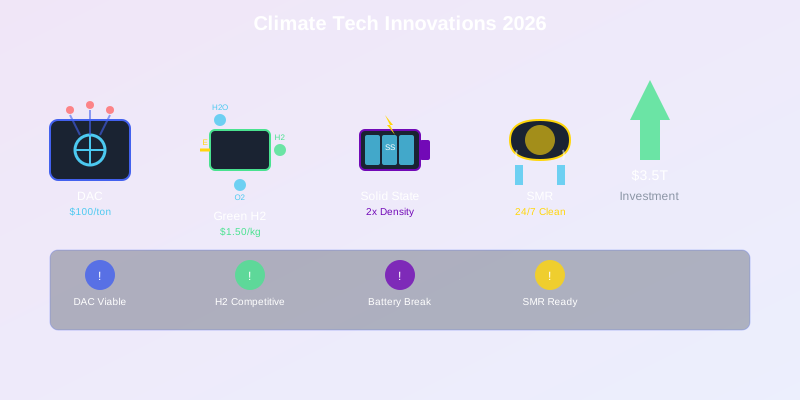
- $100/ton CO2 - cost target reached by multiple companies
- 1 megaton capacity - first commercial-scale facilities operational
- Carbon removal credits - market pricing reaching $200-300/ton
- 10 facilities - under construction globally
The DAC Revolution
At $100/ton, removing 1 billion tons CO2 annually would cost $100 billion - expensive but potentially manageable compared to climate damages. This makes "overshoot" scenarios technically feasible.
2. Green Hydrogen: The Energy Carrier Revolution
Green hydrogen costs have plummeted, making it competitive with fossil fuels for the first time in history.
- $1.50/kg - cost target reached in favorable locations
- 100 GW capacity - global green hydrogen projects under development
- Steel industry - first green hydrogen steel plants operational
- Shipping fuel - green ammonia routes starting commercial service
Hydrogen's Climate Impact
Green hydrogen could decarbonize 25% of global emissions - steel, shipping, long-haul transport, and industrial heat. This is one of the biggest climate opportunities available.
3. Next-Generation Batteries: Beyond Lithium
2026 sees commercial deployment of multiple battery chemistries that solve lithium's limitations.
- Solid-state batteries - 2x energy density, fire-safe
- Sodium-ion batteries - lithium-free, 30% cheaper
- Iron-air batteries - grid storage at $20/kWh
- Graphene supercapacitors - instant charging, million-cycle life
The Storage Revolution
Grid-scale storage at $20/kWh makes 100% renewable grids economically viable. This could eliminate the need for fossil fuel backup power entirely.
4. Adaptation Technology: Building Resilience
With warming inevitable, 2026 focuses on technologies that help us adapt to the new climate reality.
- Atmospheric water generation - 10,000 liters/day from desert air
- Drought-resistant crops - 50% less water, same yields
- Heat-resistant materials - buildings that stay 10°C cooler
- AI climate prediction - extreme weather warnings 2 weeks in advance
Survival Technology
Atmospheric water generation could provide drinking water for 100 million people in water-stressed regions by 2030. This is life-saving adaptation technology.
5. Industrial Carbon Capture: The Heavy Industry Solution
2026 sees commercial deployment of carbon capture for cement, steel, and chemical industries.
- Cement plants - first carbon-neutral cement facilities
- Steel mills - hydrogen-based steel with carbon capture
- Chemical plants - carbon capture for ammonia and methanol
- Utilization pathways - captured CO2 converted to fuels and materials
Industrial Decarbonization
Heavy industry accounts for 30% of global emissions. Carbon capture makes these sectors compatible with climate goals without complete industry shutdown.
6. Nuclear Renaissance: Small Modular Reactors
2026 is the year Small Modular Reactors (SMRs) become commercially viable, offering baseload power without emissions.
- First commercial SMR - operational in North America
- $3,000/kW - construction cost competitive with renewables+storage
- 3-year construction - vs 10+ years for traditional nuclear
- Passive safety - meltdown-proof designs
The Nuclear Option
SMRs could provide 24/7 clean power to complement intermittent renewables, potentially solving the grid decarbonization challenge.
Investment Flows: The Money Follows Innovation
2026 sees massive capital flows into climate tech as investors recognize the scale of the opportunity.
- $500 billion - venture capital into climate tech
- $2 trillion - corporate climate tech spending
- $1 trillion - government climate R&D and deployment
- $3.5 trillion total - climate tech investment in 2026
The Scale of Opportunity
Climate tech represents the biggest economic transformation since the industrial revolution. Companies leading this transformation will dominate the 21st century economy.
Challenges: The Innovation Hurdles
Despite breakthroughs, significant challenges remain for climate technology deployment at scale.
- Supply chain constraints - critical minerals for batteries and solar
- Permitting and regulation - slow approval processes slow deployment
- Grid integration - outdated infrastructure hampers renewables
- Skilled workforce - shortage of climate tech workers and engineers
The Time Constraint
Even with perfect technology, we're racing against the climate clock. 43.5 billion tons CO2 in 2026 means we need deployment at unprecedented speed and scale.
The Innovation Imperative: Hope in Technology
2026's technology breakthroughs don't solve the climate crisis, but they make managing it possible. The difference between 2°C and 3°C warming may come down to how quickly we deploy these innovations.
Your Role in the Tech Revolution
- Adopt new technologies - EVs, heat pumps, solar panels
- Support climate companies - work for, invest in, buy from climate leaders
- Advocate for deployment - push for policies that enable rapid scale-up
- Learn new skills - prepare for the climate tech economy
Track Innovation Progress
Visit our live carbon counter to see emissions accumulate while technology races to catch up. The 1,338 tons per second reminder drives the urgency of innovation.
2026's technology breakthroughs offer genuine hope, but hope isn't enough. We need deployment at wartime speed to make these innovations matter in the climate crisis timeline.