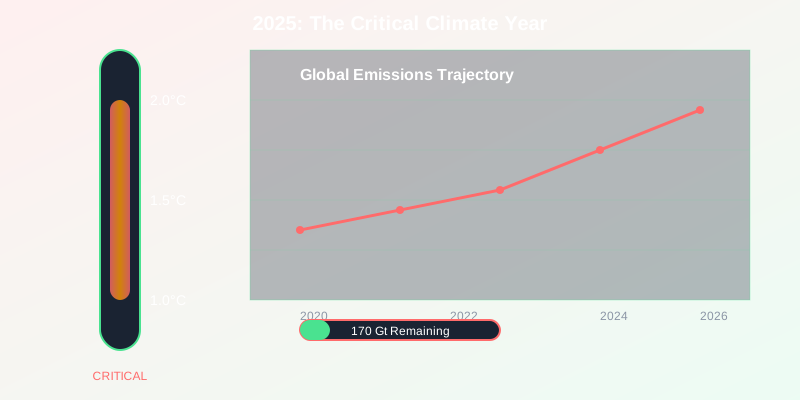
We've reached the climate tipping point scientists have been warning about for decades. The 2025 Global Carbon Budget report confirms what many feared: we're now in the critical decade that will determine our planet's future.
WARNING: 1.5°C Target No Longer Plausible
The remaining carbon budget for 1.5°C is down to just 170 billion tons - virtually exhausted. At current emission rates (42.2 billion tons per year), this budget will be gone by 2029.
Record Emissions in 2025: What Changed?
This year, global emissions hit an unprecedented 38.1 billion tons of fossil CO2 - a new record despite global climate efforts. Here's the breakdown:
- Fossil fuel emissions: 38.1 Gt CO2 (+1.1% growth)
- Land-use change: 4.1 Gt CO2 (declining slightly)
- Total emissions: 42.2 Gt CO2 per year
- Atmospheric CO2: 427.1 ppm (highest in human history)
The Growth Drivers
Emissions increased across all fuel types: coal (+0.8%), oil (+1.0%), and natural gas (+1.3%). International aviation emissions surged by 6.8% as travel rebounds post-pandemic.
The Carbon Budget Reality Check
The concept of a "carbon budget" is simple: there's a finite amount of CO2 we can emit while staying within safe climate limits. Here's where we stand:
Budget Status: Critical
- 170 Gt CO2 remaining for 1.5°C (83% probability)
- 42.2 Gt CO2 emitted annually
- 1,338 tons CO2 emitted every second
- 2029 - Budget exhaustion at current rates
What does this mean? Even if emissions stopped today, we've already locked in significant warming. The question now is how much worse it will get.
Climate Tipping Points: The Domino Effect
Scientists warn we're approaching irreversible tipping points. Once crossed, these changes become self-perpetuating, regardless of human emissions:
- Arctic sea ice - Could disappear completely by 2035
- Amazon rainforest - 20% already converted, risking collapse
- Greenland ice sheet - Melting accelerating beyond recovery
- Coral reefs - 90% could die with 1.5°C warming
What This Means for You
The climate crisis is no longer a future problem - it's a current emergency. Here's how this affects your daily life:
Personal Impact Timeline
- 2025-2029: More extreme weather, rising food costs
- 2030-2035: Water scarcity, climate migration increases
- 2035-2040: Major ecosystem disruptions, economic impacts
But here's the crucial point: your actions still matter. Every ton of CO2 we avoid buys time for adaptation and innovation.
The Scale of Action Required
To avoid catastrophic warming, we need unprecedented changes:
Required by 2030 (5 years):
- 43% reduction in global emissions from 2019 levels
- Phase out coal completely in developed countries
- 100% renewable energy for electricity generation
- Electrify everything - transport, heating, industry
Why Hope Still Matters
Despite the dire situation, there are reasons for hope. Renewable energy costs are plummeting, electric vehicle adoption is accelerating, and climate awareness is at an all-time high.
Your Role in This Critical Year
With 1,338 tons of CO2 entering the atmosphere every second, your choices matter more than ever. Every kilowatt-hour saved, every mile walked, every plant-based meal contributes to slowing the clock.
Track the Crisis in Real-Time
Visit our live carbon counter to watch emissions accumulate and understand the urgency of immediate action. The numbers don't lie - and they change every second.
2025 isn't just another year - it's the year that determines whether future generations inherit a livable planet. The time for gradual change is over. We need rapid, systemic transformation, starting now.