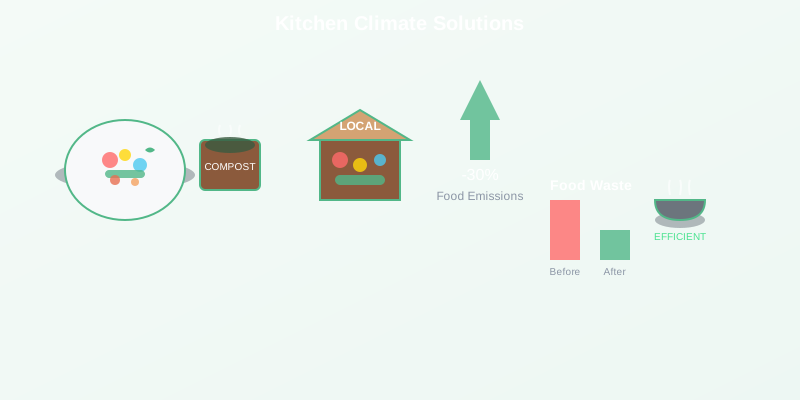
Your kitchen is one of the most powerful climate action tools you have. Food accounts for 25-30% of global emissions, making your eating choices critical in a world emitting 42.2 billion tons of CO2 annually.
Why Food Choices Matter in 2025
With the carbon budget down to 170 billion tons, every meal becomes a climate decision. The food system emits 13.7 billion tons CO2e yearly - nearly a third of global emissions.
1. The Plant-Based Revolution
Shifting toward plant-based eating is the single biggest climate action most people can take.
- 73% lower emissions than meat-heavy diets
- 2.5 metric tons CO2 saved annually per person
- One meatless day/week = 500 kg CO2 saved yearly
- Land use reduced by 75% compared to meat production
Your Plate, The Planet
Going plant-based one day per week saves the same emissions as not driving for 3 months. With 1,338 tons of CO2 entering the atmosphere every second, these savings add up fast.
2. Food Waste: The Hidden Climate Criminal
One-third of all food produced globally is wasted, emitting 3.3 billion tons CO2e - more than entire countries.
- 8% of global emissions from wasted food
- 1.3 billion tons of food wasted annually
- $1 trillion economic loss yearly
- 25% of freshwater used to grow wasted food
The Waste Emergency
Eliminating food waste would cut global emissions by 8% instantly - equivalent to taking all cars off US roads. This is one of the fastest climate wins available.
3. Smart Shopping: Climate-Friendly Grocery Lists
How you shop determines your food's climate footprint before it even reaches your kitchen.
- Local first - reduces transportation emissions
- Seasonal produce - 50% lower emissions than out-of-season
- Bulk buying - reduces packaging waste
- Plant proteins - beans, lentils, tofu over meat
The Local Food Advantage
Buying local can cut food emissions by 20-30%. With the carbon budget virtually exhausted at 170 billion tons, these reductions are crucial.
4. Sustainable Cooking: Energy-Smart Kitchen
How you cook matters as much as what you cook. Kitchen energy use adds significantly to your food's carbon footprint.
- Microwave over oven - 80% less energy
- Pressure cooking - 70% energy savings
- Lid on pots - 20% less energy used
- Batch cooking - one heating session, multiple meals
Cooking Climate Math
Efficient cooking saves 300 kg CO2 annually - equivalent to charging 150,000 smartphones. Every watt saved helps preserve our critical 170 billion ton carbon budget.
5. Strategic Meal Planning: Waste-Free Eating
Planning meals is the secret weapon against food waste and climate impact.
- 50% less food waste with proper planning
- 400 kg CO2 saved annually per household
- $1,500 saved yearly on groceries
- Healthier eating - less processed, more whole foods
Plan Your Plate, Save the Planet
Weekly meal planning prevents the same emissions as driving 1,000 miles less per year. With 42.2 billion tons of emissions annually, these savings matter.
6. Composting: Turn Waste into Climate Solution
Composting prevents food waste from becoming methane - a greenhouse gas 25x more potent than CO2.
- 50% reduction in household waste
- 300 kg CO2e saved annually per household
- Creates nutrient-rich soil - better plant growth
- Reduces methane from landfills
The Methane Emergency
Food waste in landfills creates methane - 25x more potent than CO2. Composting prevents these emissions while building soil that captures more carbon.
Your Kitchen Climate Action Plan
Transform your kitchen into a climate solution with these actionable steps:
Start This Week:
- One meatless day - try Meatless Mondays
- Plan 3 meals to reduce waste
- Buy local produce from farmers markets
- Start composting - even a small bin helps
Watch Your Food Impact in Real-Time
Visit our live carbon counter to see the 1,338 tons of CO2 entering the atmosphere every second. Your food choices directly slow this clock and help preserve our critical 170 billion ton carbon budget.
Food accounts for nearly a third of global emissions. Your kitchen choices aren't just about nutrition - they're about whether future generations inherit a livable planet. Every sustainable meal matters in 2025.