Family
Eco-friendly family activities: 20 ideas kids actually enjoy, by age and setting
The activities that stick are hands-on, short and lead to something real: a lower meter reading, a full salad bowl, a bin that is lighter at the end of the week. Here are 20 that work, with the facts behind them.
What makes a good eco activity for families?
The best eco-friendly family activities are short, hands-on and end in a result children can see: a lower meter reading, a pot of herbs, a smaller bag of food waste. Match the activity to your child’s age, keep the climate facts simple and true, and let them take charge of something.
Tone matters. In a 2021 survey of 10,000 people aged 16-25 in ten countries, 59% said they were very or extremely worried about climate change (Hickman et al., The Lancet Planetary Health). Practical, hopeful activities are a better fit than frightening facts. They can also work in both directions: a study in North Carolina found that when children learned about climate change at school, their parents’ concern rose too (Lawson et al., 2019).
All 20 ideas at a glance
| Activity | Best age | Setting | Time |
|---|---|---|---|
| 1. Light-switch helper | Under 6 | Home | Daily, 1 min |
| 2. Recycling sorting game | Under 6 | Home | 10 min |
| 3. Grow cress or beans | Under 6 | Home or garden | 2 weeks |
| 4. Nature scavenger hunt | Under 6 | Outdoors | 30-60 min |
| 5. Build a bug hotel | Under 6 and up | Garden | 1 hour |
| 6. Family energy-detective challenge | 6-11 | Home | 1 week |
| 7. Food-waste detectives | 6-11 | Home | 1 week |
| 8. Pizza or salad garden in pots | 6-11 | Garden or balcony | 1 season |
| 9. Measure a tree | 6-11 | Outdoors | 30 min |
| 10. Can and paper investigation | 6-11 | Home or school | 1 week |
| 11. Walk-or-wheel to school week | 6-11 | Community | 1 week |
| 12. Litter pick and tally | 6-11 | Outdoors or community | 1 hour |
| 13. Repair and swap day | 6-11 and up | Home or community | Half a day |
| 14. Smart meter data project | Teens | Home | 1-2 weeks |
| 15. Country comparison project | Teens | Home or school | 1-2 hours |
| 16. Low-carbon cooking week | Teens | Home | 1 week |
| 17. Plan a car-free day out | Teens | Outdoors | 1 day |
| 18. Join a citizen science survey | Teens (and younger with help) | Outdoors | 1-2 hours |
| 19. Start or join a school eco-committee | Teens | School | Ongoing |
| 20. Volunteer for tree planting or habitat work | Teens and families | Community | Half a day |
Activities for under-6s
Young children learn through routines, sorting and growing things. Keep explanations to one sentence and let them do the physical part.
- Light-switch helper. Give them the job of checking lights when the family leaves a room. Praise the habit, not the savings.
- Recycling sorting game. Wash out a few items (a can, a yoghurt pot, a cardboard box, a jar) and sort them into labelled boxes that match your local bins. Rules differ between councils, so check yours together.
- Grow cress or beans. Cress on damp kitchen paper sprouts within days; a bean in a clear jar shows roots and shoot. Talk about how plants take in CO₂ from the air to grow.
- Nature scavenger hunt. Make a picture list: a feather, three kinds of leaf, something red, a snail. Look but leave everything where it is.
- Build a bug hotel. Pack hollow stems, pine cones, bark and dry leaves into an old crate or pallet and put it in a quiet, sheltered spot. Older siblings can draw and label who moves in.
Activities for ages 6-11
This age loves missions, scores and real measurements. Give them tools such as a notebook, a tape measure or a phone camera, and let them report back to the family.
6. The family energy-detective challenge
This is the activity to start with, because it links what happens at home to the global numbers. It takes a week and works for the whole family.
- Day 1, the big number: open the live CO₂ counter and watch it for one minute. At about 1,338 tonnes a second, the world emits roughly 80,000 tonnes of CO₂ in that minute. Ask: how heavy is a tonne? (About the weight of a small car.)
- Day 2, the meter: read the electricity meter in the morning and evening, or check the smart meter display. Write down the kWh.
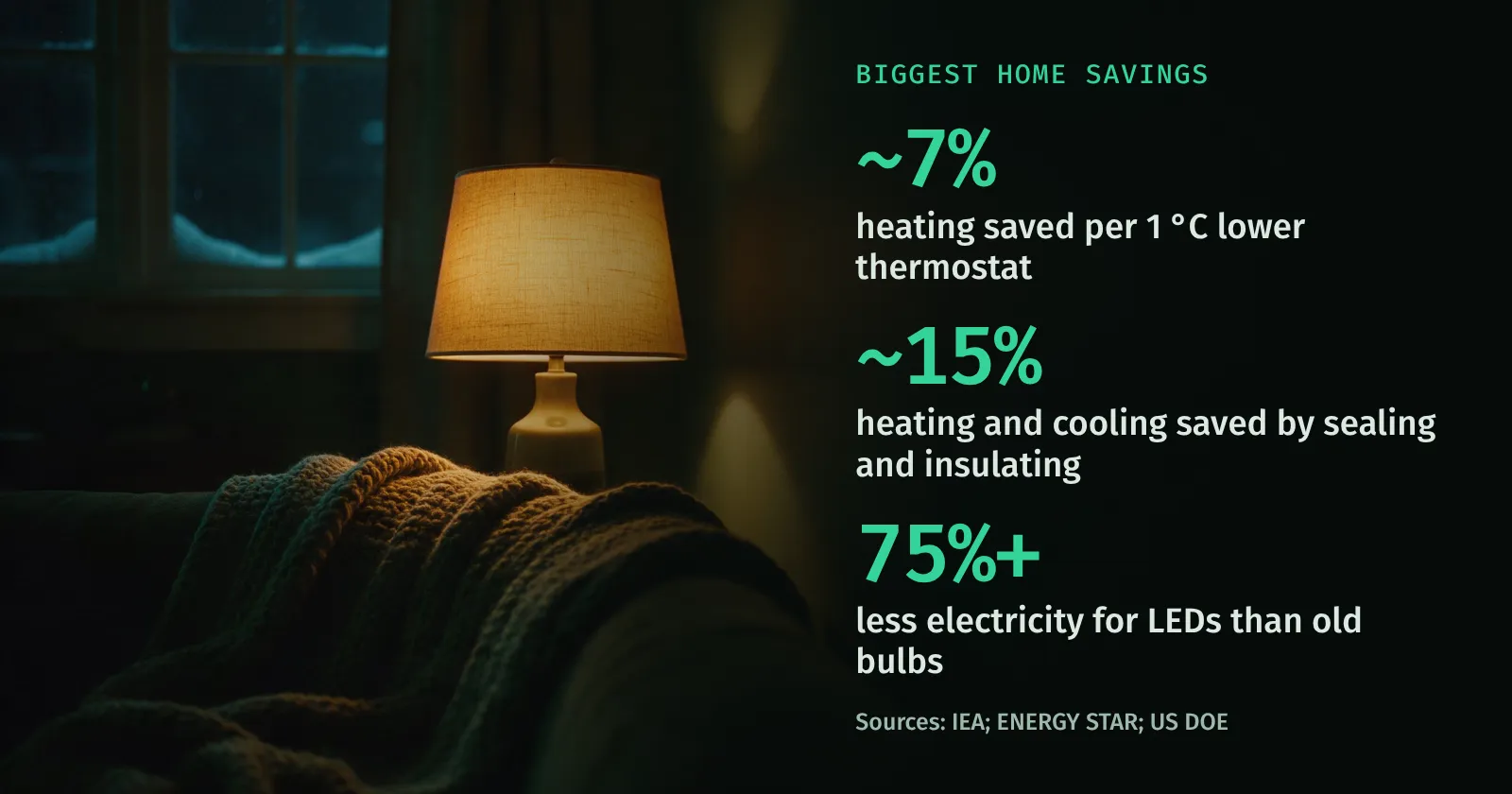
- Day 3, the hunt: look for lights left on, chargers in sockets and devices glowing on standby. Score one point each. Standby power accounts for 5-10% of home energy use, according to the US Department of Energy.
- Day 4, switch-off hour: pick an hour, switch off everything you safely can and compare the meter reading with a normal hour.
- Day 5, kWh to CO₂: multiply the kWh saved by your grid’s carbon intensity. The world average in 2025 was 458 g per kWh (Ember), so 2 kWh is about 0.9 kg of CO₂.
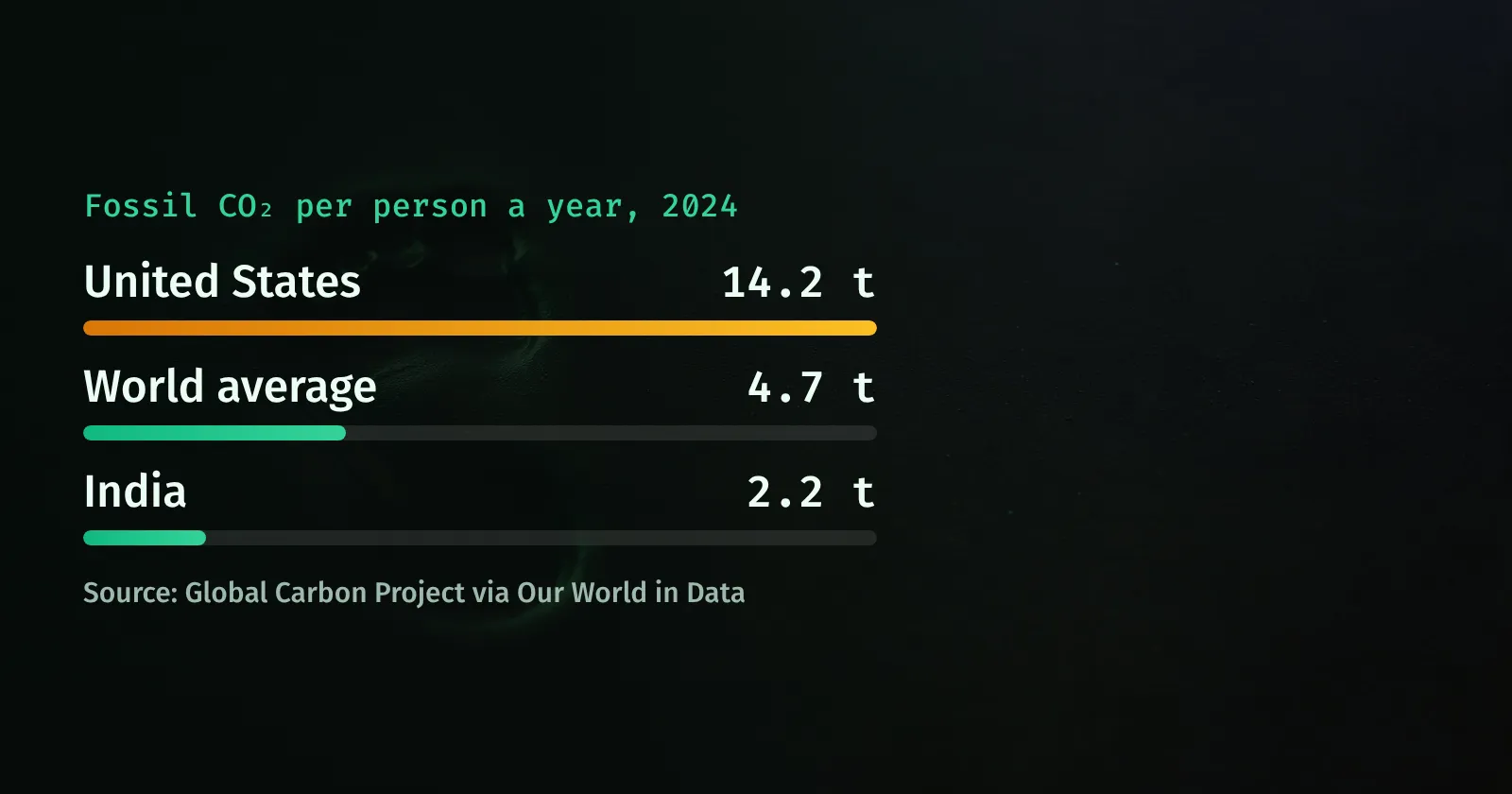
- Day 6, compare countries: use our CO₂ emissions by country ranking to find your country and two others. Ask: which countries emit the most in total, and is that the same as the most per person?
- Day 7, the plan: choose three habits to keep and put the detective’s scoreboard on the fridge.
7. Food-waste detectives
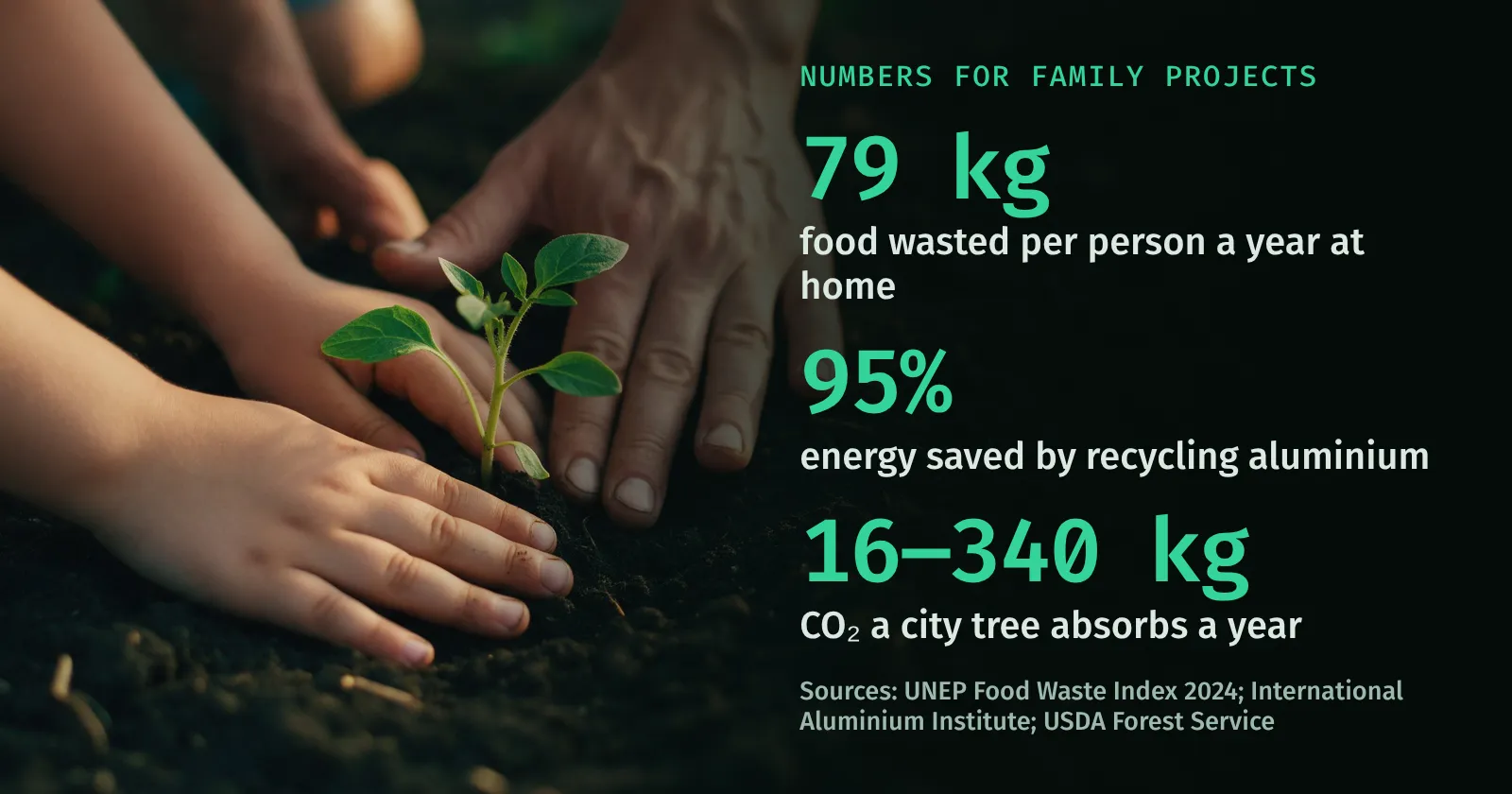
For one week, put anything edible you throw away into a separate tub and weigh it each evening with kitchen scales. Then talk about why it was wasted: too much cooked, forgotten in the fridge, didn’t like it. Globally, households waste about 79 kg of food per person a year, 60% of all food waste (UNEP Food Waste Index 2024), and food loss and waste causes 8-10% of global greenhouse gas emissions. In US landfills, food waste is responsible for an estimated 58% of the methane that escapes from municipal solid waste sites (EPA). Next week, try a leftovers night and see if the tub gets lighter.
8. Pizza or salad garden in pots
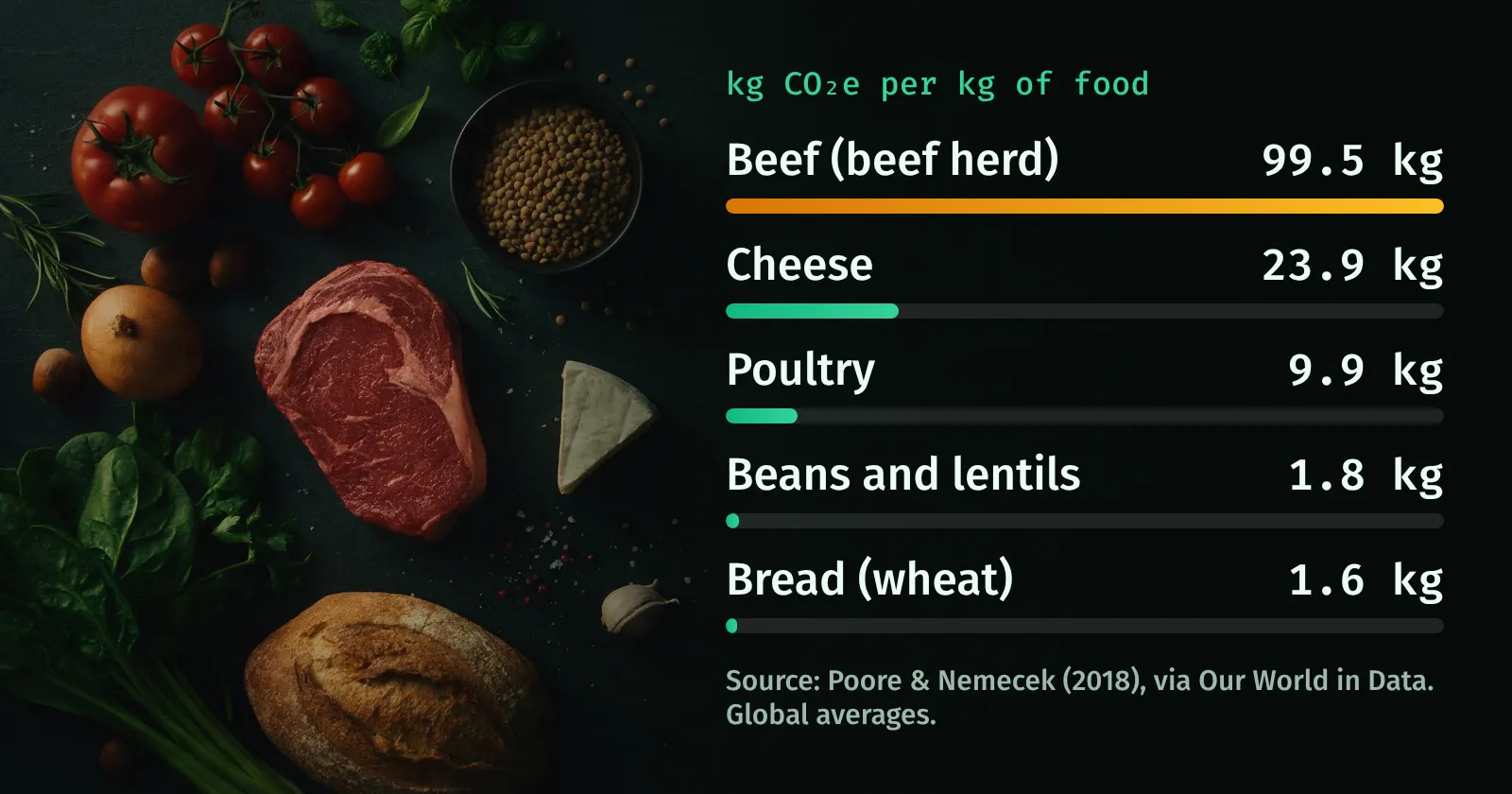
Grow tomatoes, basil and oregano for a pizza, or lettuce, radishes and herbs for a salad. Radishes are ready in about a month, which suits impatient gardeners. Our post on food and climate has more on which foods have the lowest footprint.
9. Measure a tree
Measure around a tree trunk at about 1.3 m above the ground and divide by 3.14 to get its diameter. A USDA Forest Service study of Chicago’s trees found that small trees (8-15 cm across) absorb about 16 kg of CO₂ a year, while very large ones (over 76 cm) absorb about 340 kg. Compare that with the world average of 4.7 tonnes of fossil CO₂ per person: it would take nearly 300 small trees or 14 very large ones to absorb one person’s yearly emissions. That is a gentle way to show that trees help, but cutting emissions matters most.
10. Can and paper investigation
Collect every drinks can and piece of paper the household uses in a week and count them. Then share the fact: making aluminium from recycled cans uses about 95% less energy than making it from raw ore (International Aluminium Institute). Children can make a poster for the recycling bin or the school canteen.
11-13. Out in the community
- Walk-or-wheel week: walk, cycle or scoot to school for a week and mark each trip on a chart. Invite a friend’s family.
- Litter pick and tally: with gloves and a grabber, collect litter in a park or beach and tally it by type. The tally makes a good letter to the council or a school assembly.
- Repair and swap day: fix a broken toy or sew on buttons together, or swap outgrown clothes and books with other families. Look for a local repair café.
Activities for teenagers
Teenagers are more likely to engage when the project uses real data, involves real choices and gives them some say. Treat them as consultants, not helpers.
- Smart meter data project. Ask them to download the household’s hourly or half-hourly electricity data, find the overnight baseload and identify the three biggest uses. Our guide to saving energy at home gives them a list of fixes to recommend, and they can present the results at dinner.
- Country comparison project. Using the country pages, compare total and per-person emissions for three countries, and how fast each is changing. Good questions: why does a country’s total and per-person rank differ, and what share of its electricity comes from coal?
- Low-carbon cooking week. Give them the budget and the menu for a week of mostly plant-based meals, and let them cook at least two of them.
- Plan a car-free day out. Have them plan a trip by train, bus or bike: route, timings, cost and what to pack.
- Citizen science. Join a bird count, butterfly survey, river-quality test or light-pollution survey run by a local wildlife group or national scheme. Their data goes to real researchers.
- School eco-committee. Many schools have one; if not, a teen can start one. Practical goals work best: a switch-off campaign, a food-waste audit in the canteen or bike racks.
- Tree planting and habitat work. Local conservation groups often run family volunteer days in winter. Combine it with activity 9 so the numbers make sense.
How to make it last
- Pick one activity a month rather than ten at once.
- Write down a before number (kWh, grams of food waste, cans) so you can see progress.
- Let each child own one job, such as meter reader, plant waterer or recycling checker.
- Answer questions honestly, including hard ones, and follow each fact with something you can do.
- Celebrate results with something low-carbon: a picnic, a bike ride or choosing the next activity.
When you are ready to look at the bigger picture as a family, including travel and heating, our carbon footprint calculator guide shows where most household emissions come from.
Questions and answers
How do I teach my child about climate change without scaring them?
Start with what they can see and do: switching off lights, growing food, sorting waste. Explain the basics simply (burning coal, oil and gas adds CO₂, which traps heat) and pair every fact with something your family is doing about it. Answer older children’s questions honestly, including that the problem is serious and that many people are working on it.
What are easy sustainability activities for kids at home?
Good starters are a light-switch helper role, a recycling sorting game, growing cress or beans on a windowsill, a week-long food-waste diary and an energy-detective hunt for devices left on standby. Each takes minutes a day and shows a result.
What eco-friendly activities can teenagers do?
Teens can analyse the family’s smart meter data, compare countries’ emissions for a school project, cook a week of low-carbon meals, plan a car-free day trip, join citizen science surveys or start an eco-committee at school. Projects with real data and real decisions work better than worksheets.
How can a family reduce its carbon footprint together?
Focus on the big items first: home heating, travel and food. Then use activities like the energy-detective challenge to build habits. Our carbon footprint calculator guide helps you see which changes matter most for your household.
Sources
- Food Waste Index Report 2024, UN Environment Programme, 2024
- Quantifying methane emissions from landfilled food waste, US EPA, 2023
- Aluminium recycling saves 95% of the energy needed for primary aluminium production, International Aluminium Institute
- Atmospheric carbon dioxide reduction by Chicago’s urban forest (McPherson), USDA Forest Service, 1998
- Climate anxiety in children and young people and their beliefs about government responses (Hickman et al.), The Lancet Planetary Health, 2021
- Children can foster climate change concern among their parents (Lawson et al.), Nature Climate Change, 2019
- Global Carbon Budget 2025, Global Carbon Project, 2025
- CO₂ emissions, Our World in Data
- Are energy vampires sucking you dry? (standby power), US DOE Energy Saver
- Global Electricity Review 2026 (grid carbon intensity 2025), Ember, 2026