Guides and explainers
Practical, sourced articles on cutting your carbon footprint and understanding the climate numbers behind the live counter.
 How-to
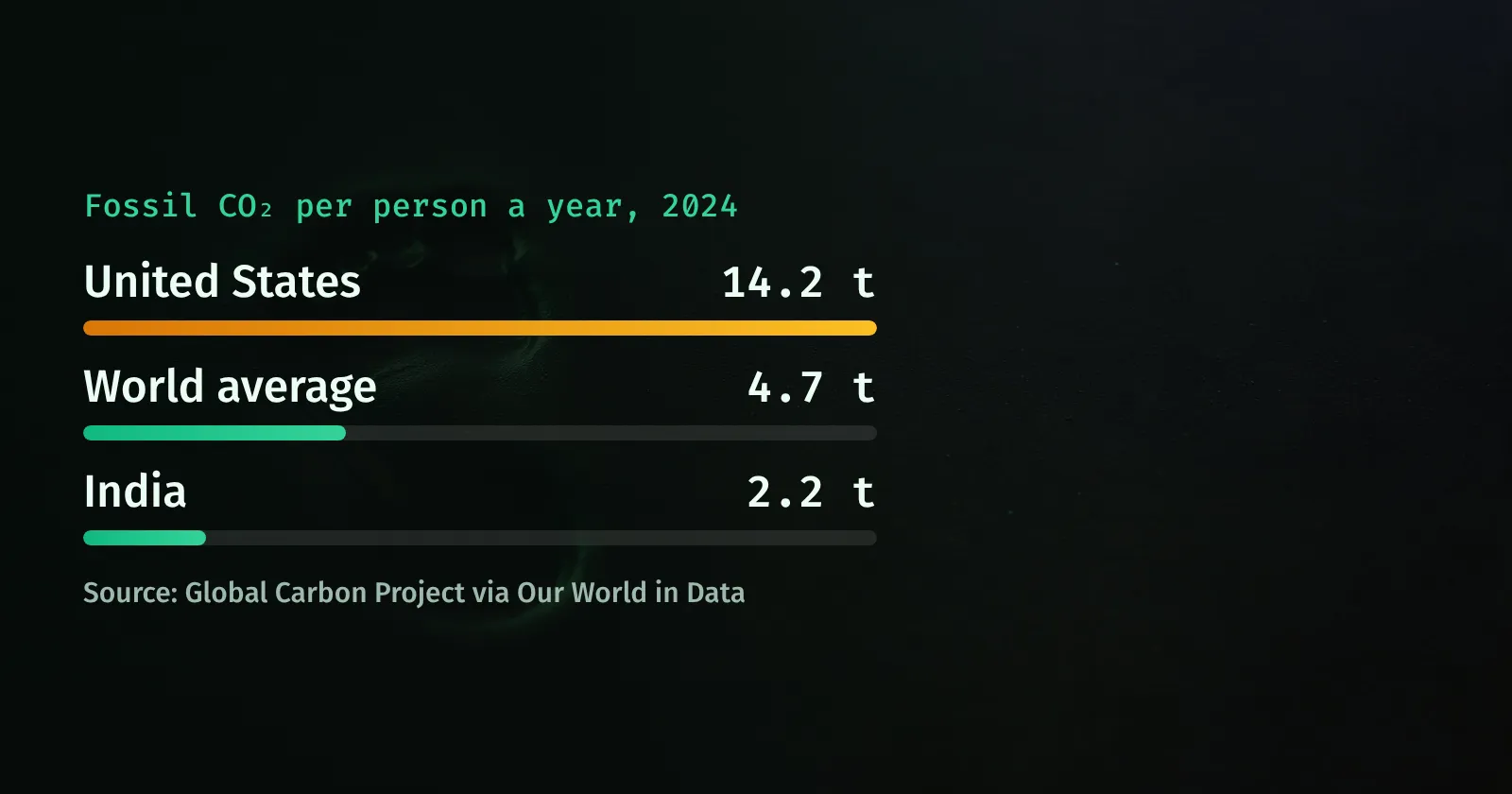
Carbon footprint calculator: estimate yours in 2 minutes
Free carbon footprint calculator with sourced 2025 emission factors. See your tonnes of CO₂e by category, how you compare and your three biggest cuts.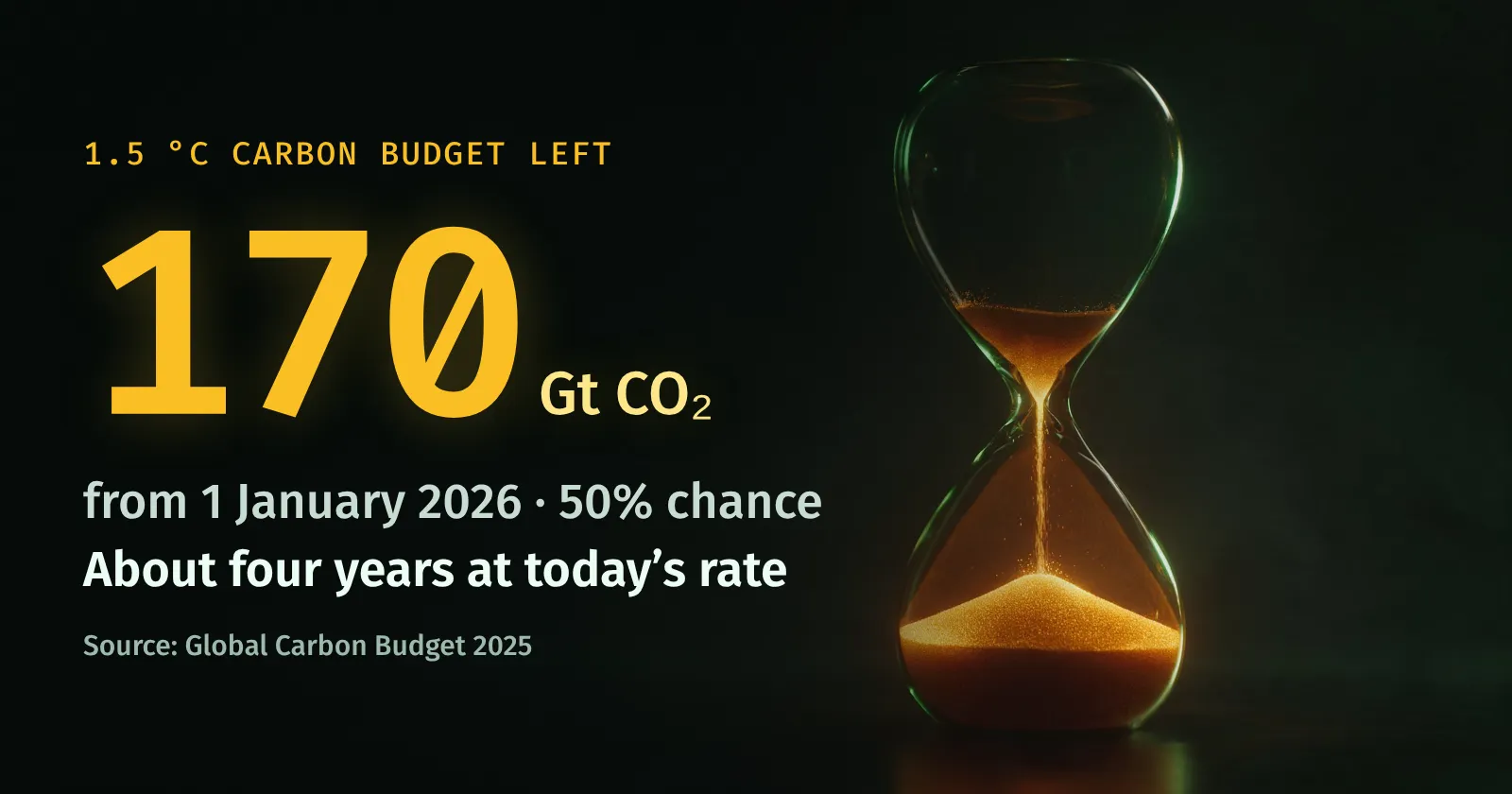 Climate science
Remaining carbon budget for 1.5 °C: how much is left in 2026, and what it means
The carbon budget explained: 130–170 Gt CO₂ was left for 1.5 °C at the start of 2026, about 3–4 years of emissions. What that means, plus 2 °C figures.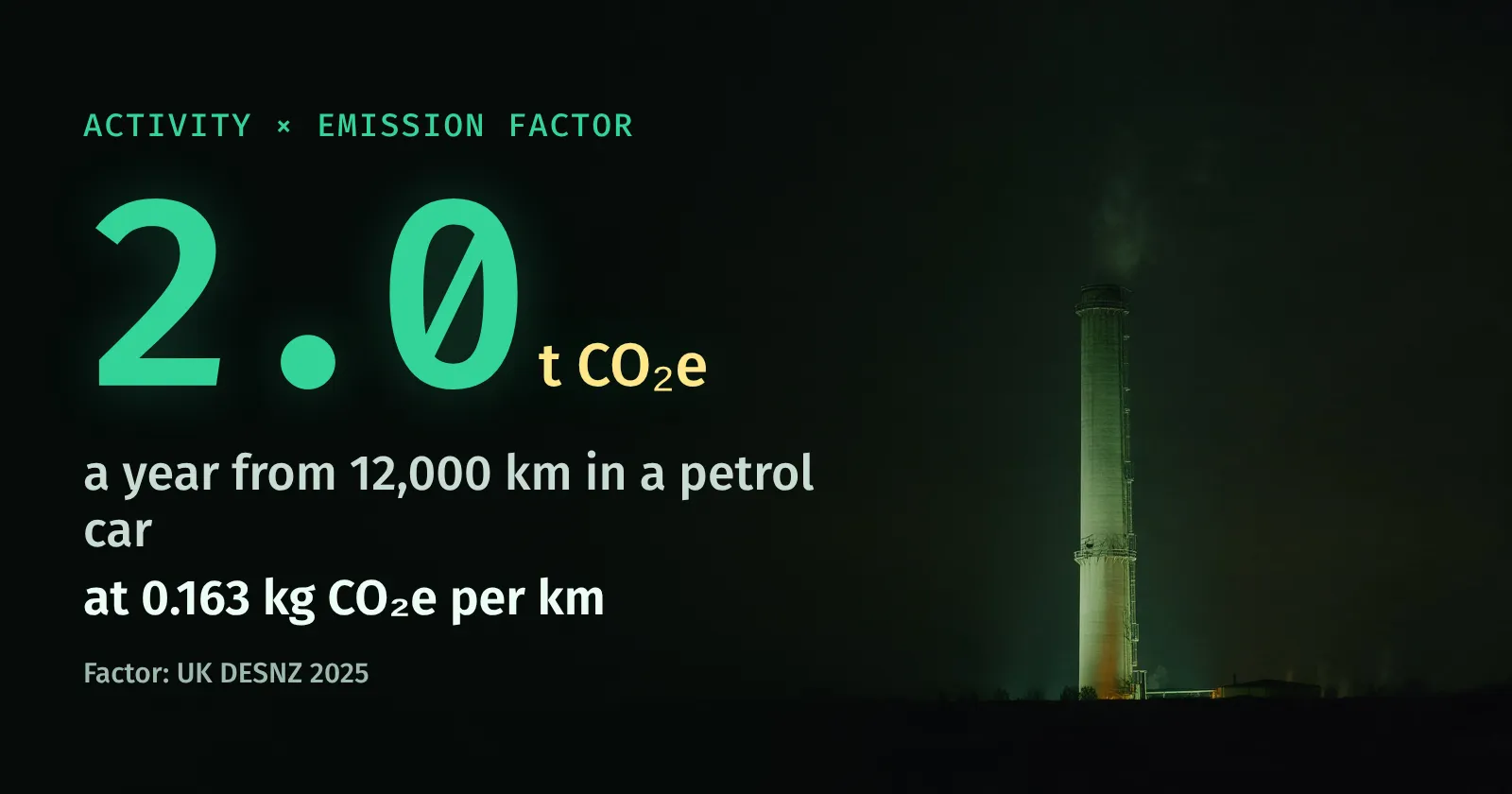 How-to
Carbon tracking: how to track carbon emissions, from your home to a whole company
What carbon tracking is and how to do it: track your own footprint, measure company emissions across scopes 1, 2 and 3, and what real-time carbon tracking can and can’t show.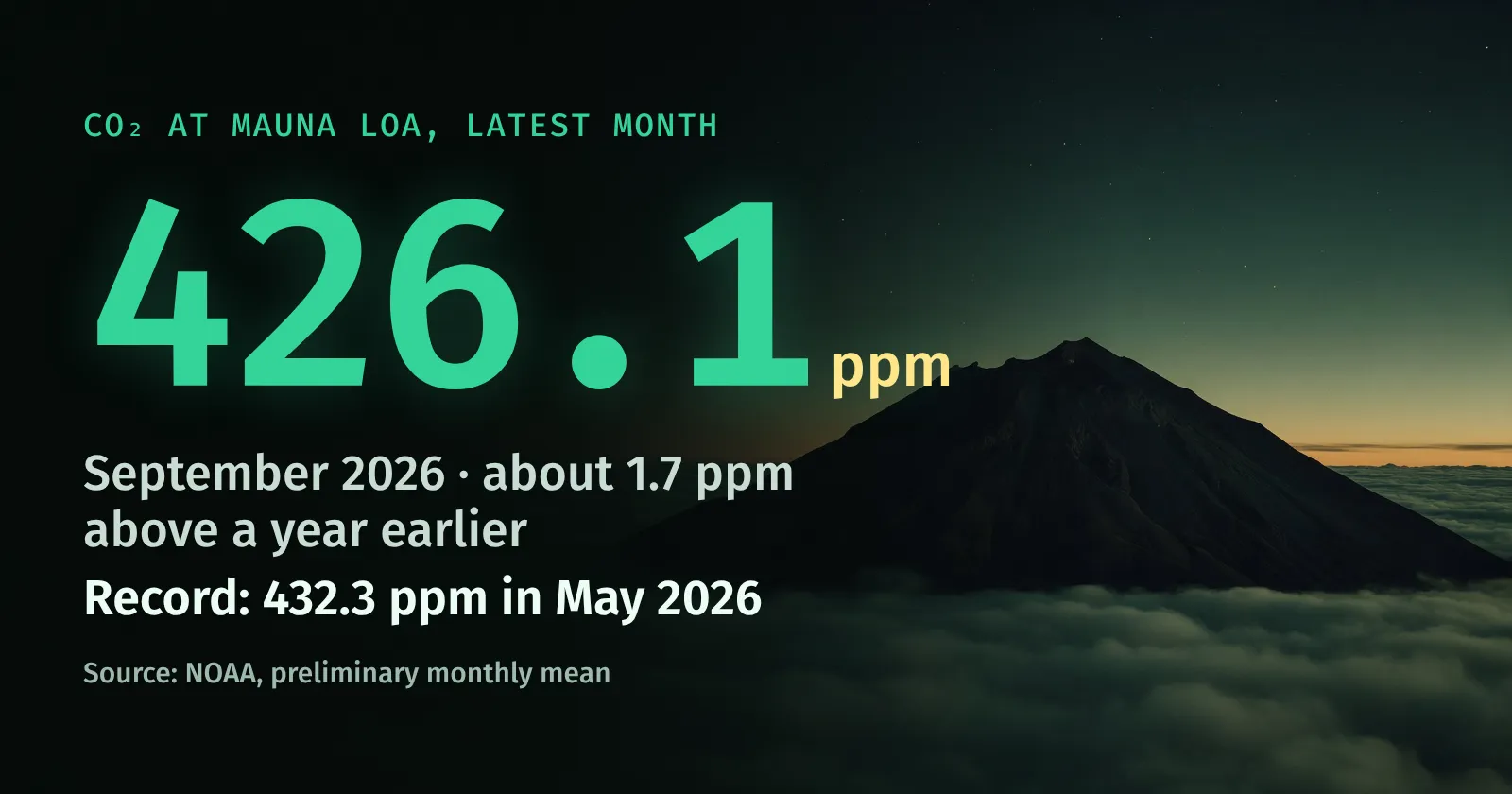 Climate science
CO₂ in the atmosphere: today’s ppm level and why it keeps rising
Current CO₂ ppm from NOAA and Scripps, the Keeling curve, record growth rates, where emitted CO₂ goes and why levels rise even if emissions stop growing.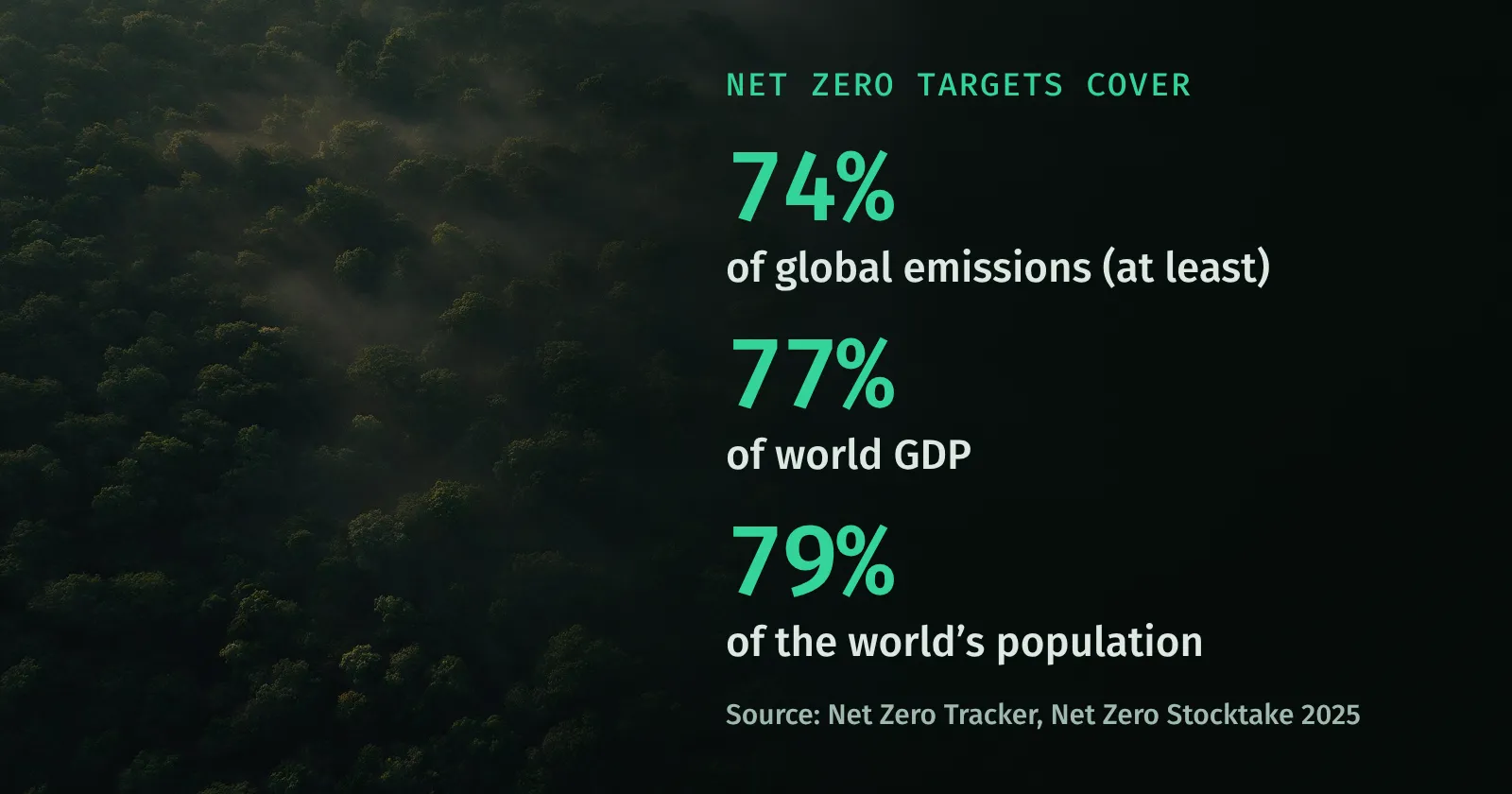 Climate science
Net zero explained: what it means, why 2050, and how far the world is
What net zero means, how it differs from carbon neutral, why science points to 2050, which countries have targets, and how far emissions are from the path.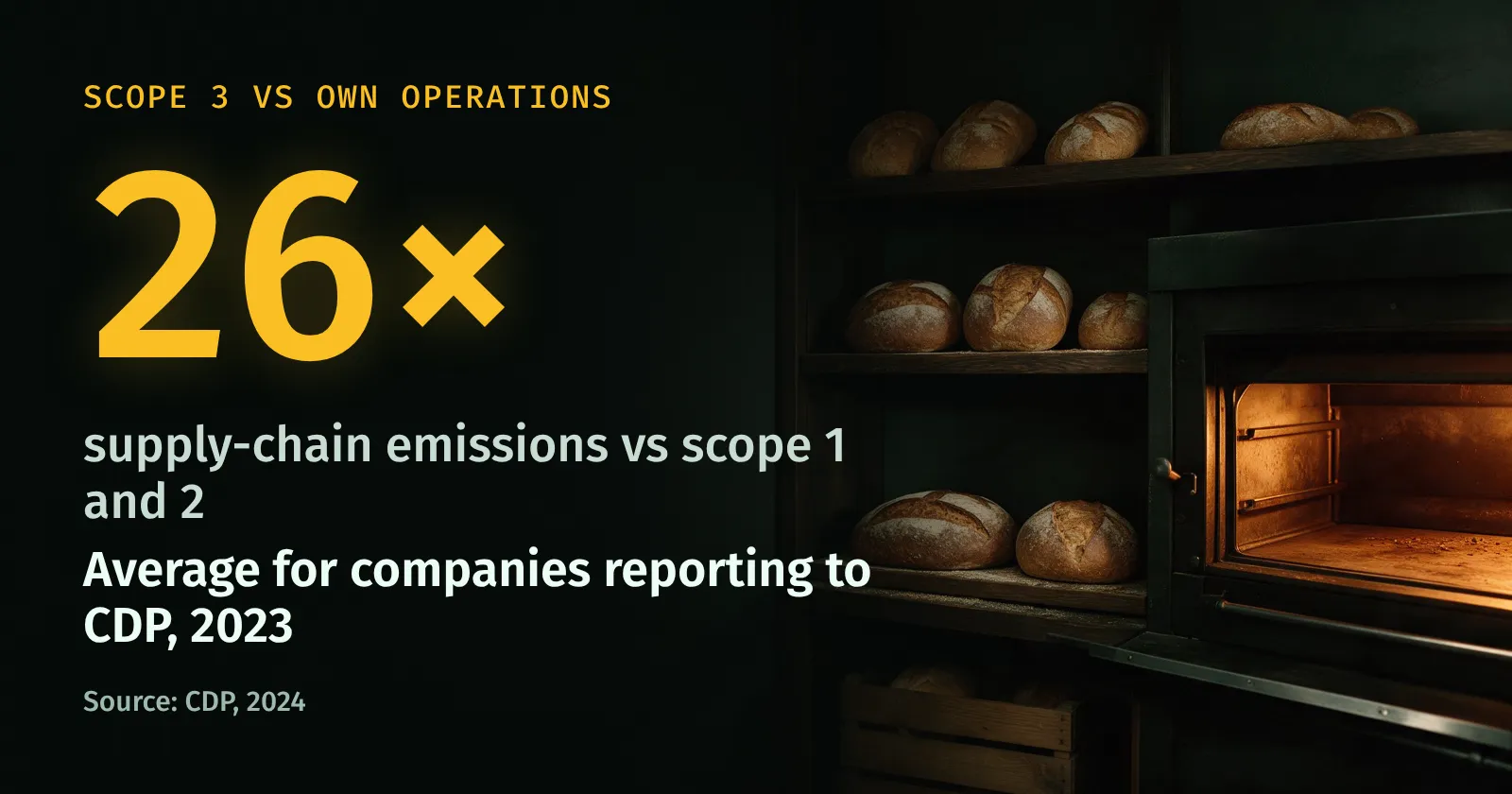 How-to
Scope 1, 2 and 3 emissions explained, with a worked bakery example
What scope 1, 2 and 3 emissions are, with bakery examples, location- vs market-based scope 2, all 15 scope 3 categories and why scope 3 is usually largest.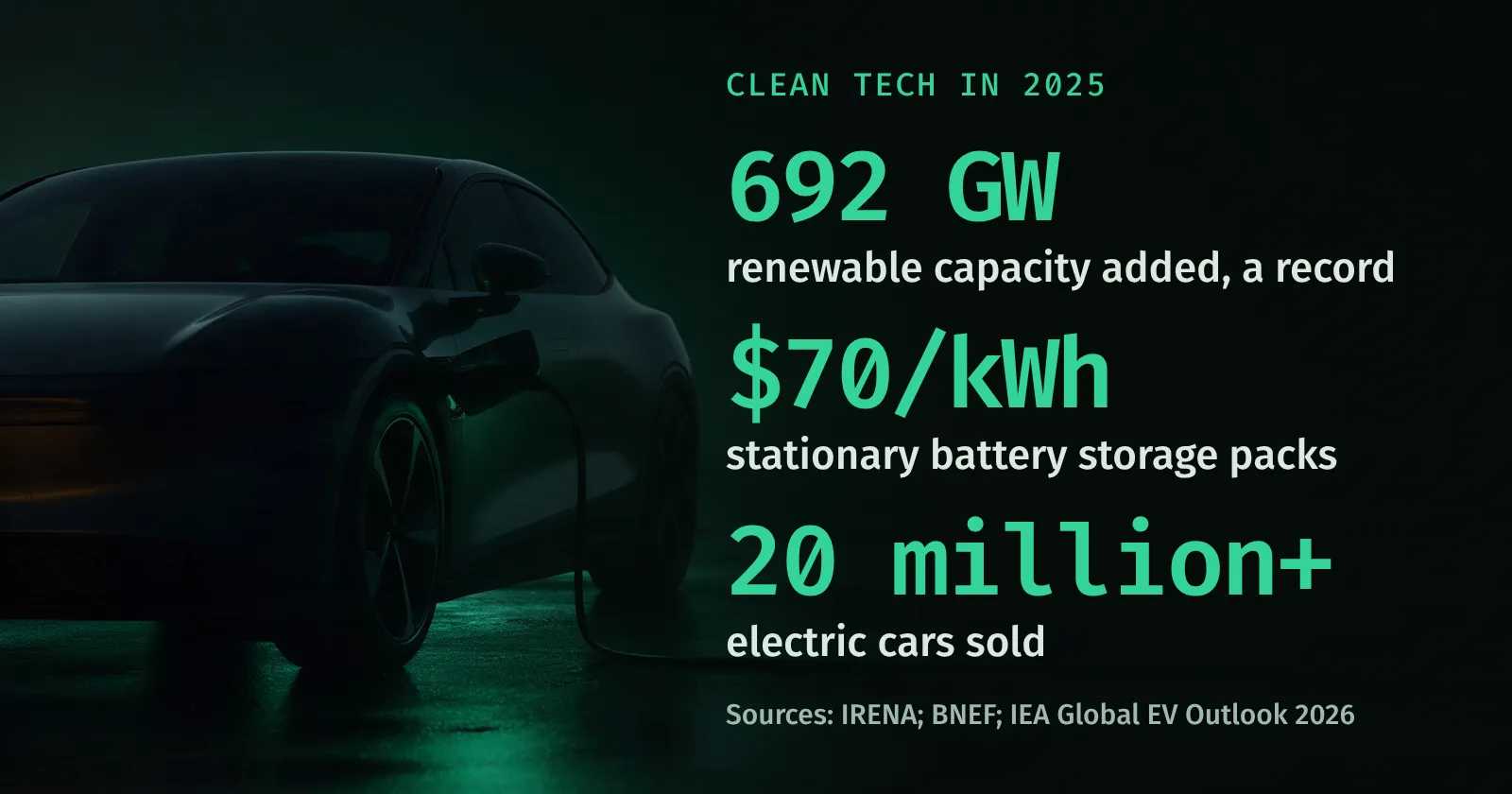 Climate tech
nology in 2026: what’s working, what’s scaling and what’s still hype
An honest 2026 check on solar, wind, batteries, EVs, heat pumps, hydrogen, carbon capture, direct air capture and small reactors, with real costs and scale.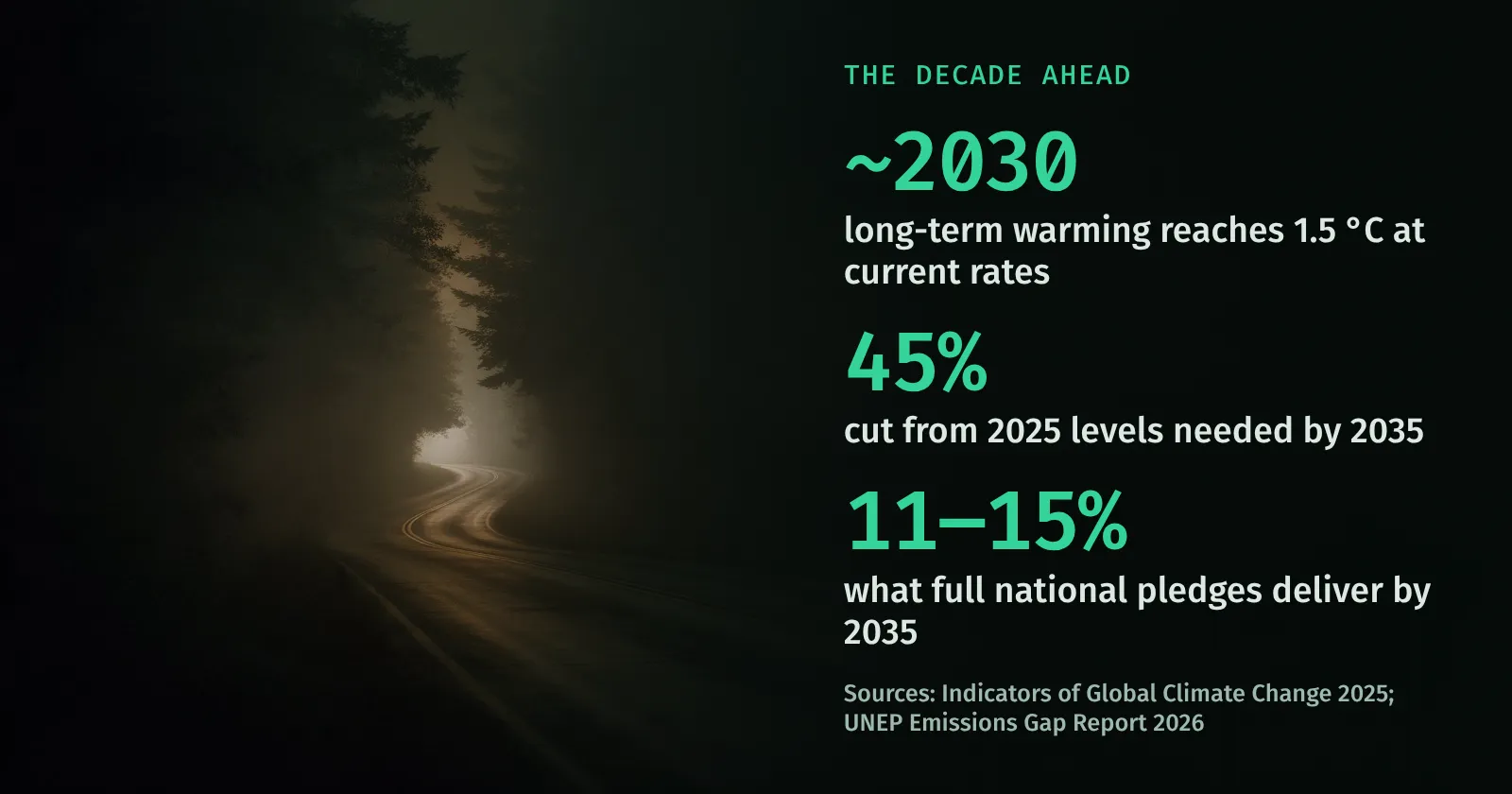 Climate science
The next decade of climate change: what to expect from 2025 to 2035
The next 10 years of climate change: when 1.5 °C is likely to be crossed, what 2030 and 2035 targets require, and what countries and people can do.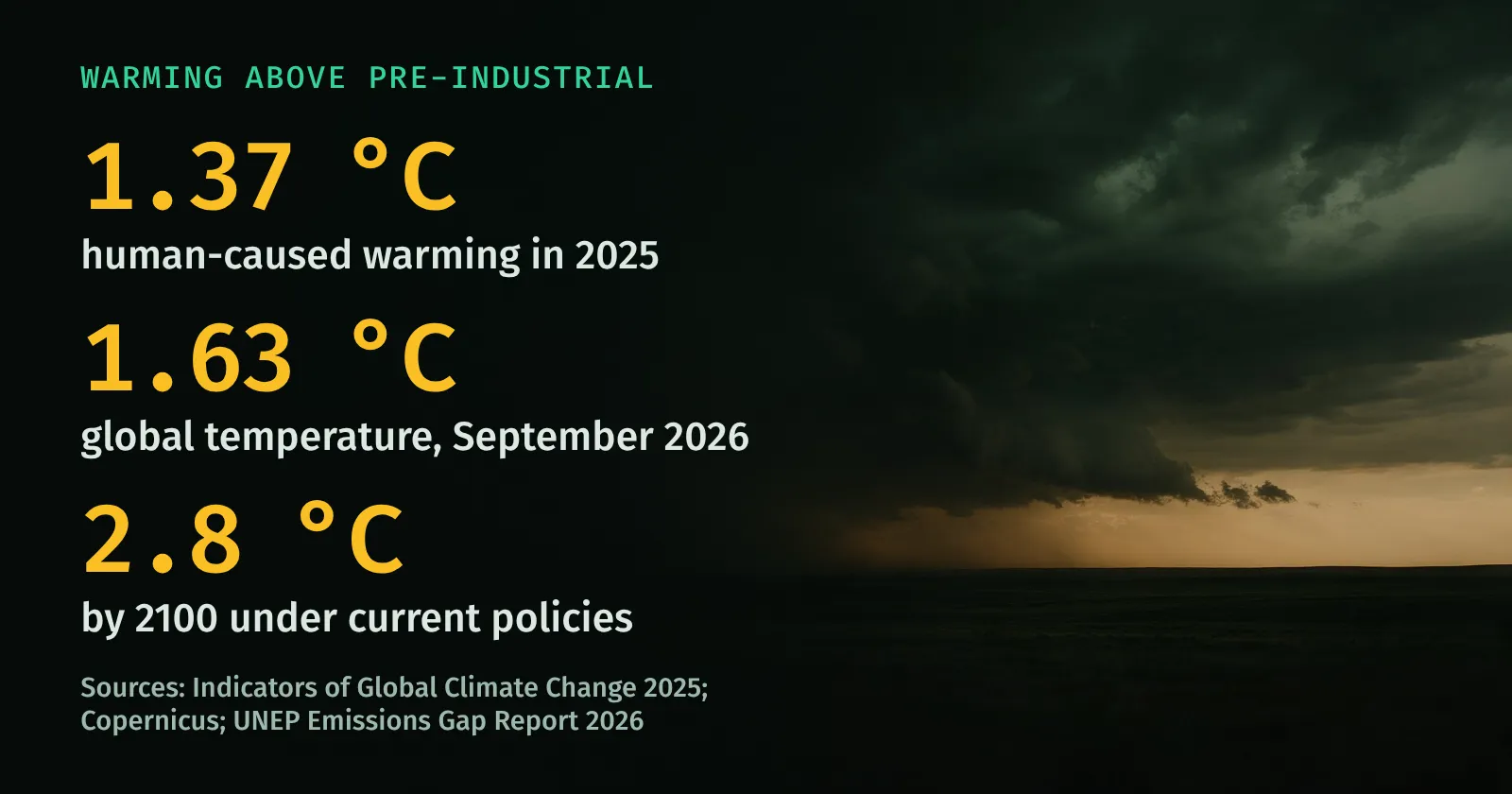 Climate science
Climate outlook 2026: emissions, warming and what to watch
Where emissions and temperatures are heading in 2026: the first projected fall in fossil CO₂ since 2020, a strong El Niño, COP31 and the policies to watch.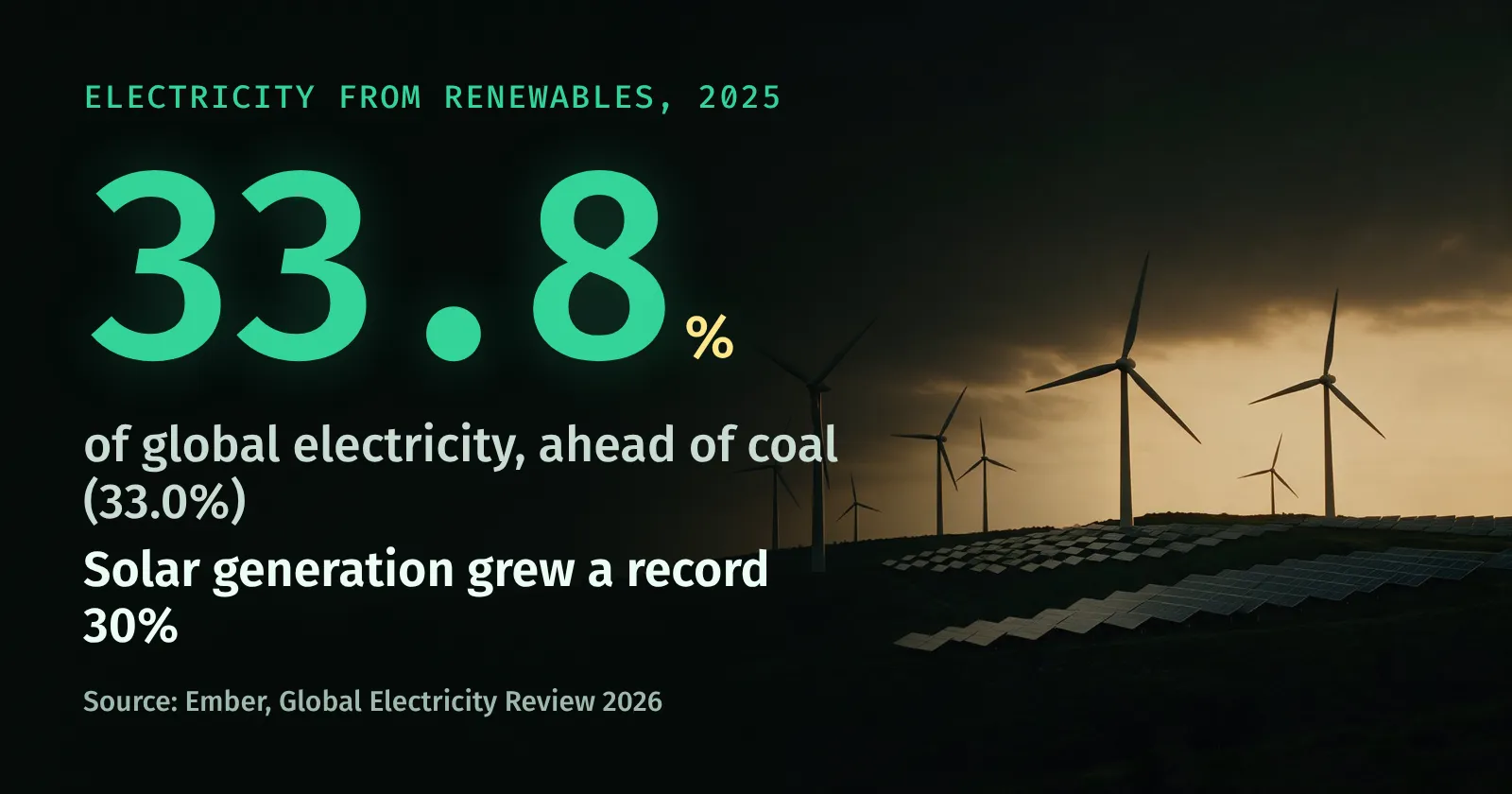 Home energy
Renewable energy in 2026: where the world stands and what you can do at home
Renewables overtook coal in 2025 with 33.8% of global electricity. Latest Ember, IEA and IRENA data, plus home options: solar, batteries, tariffs, heat pumps.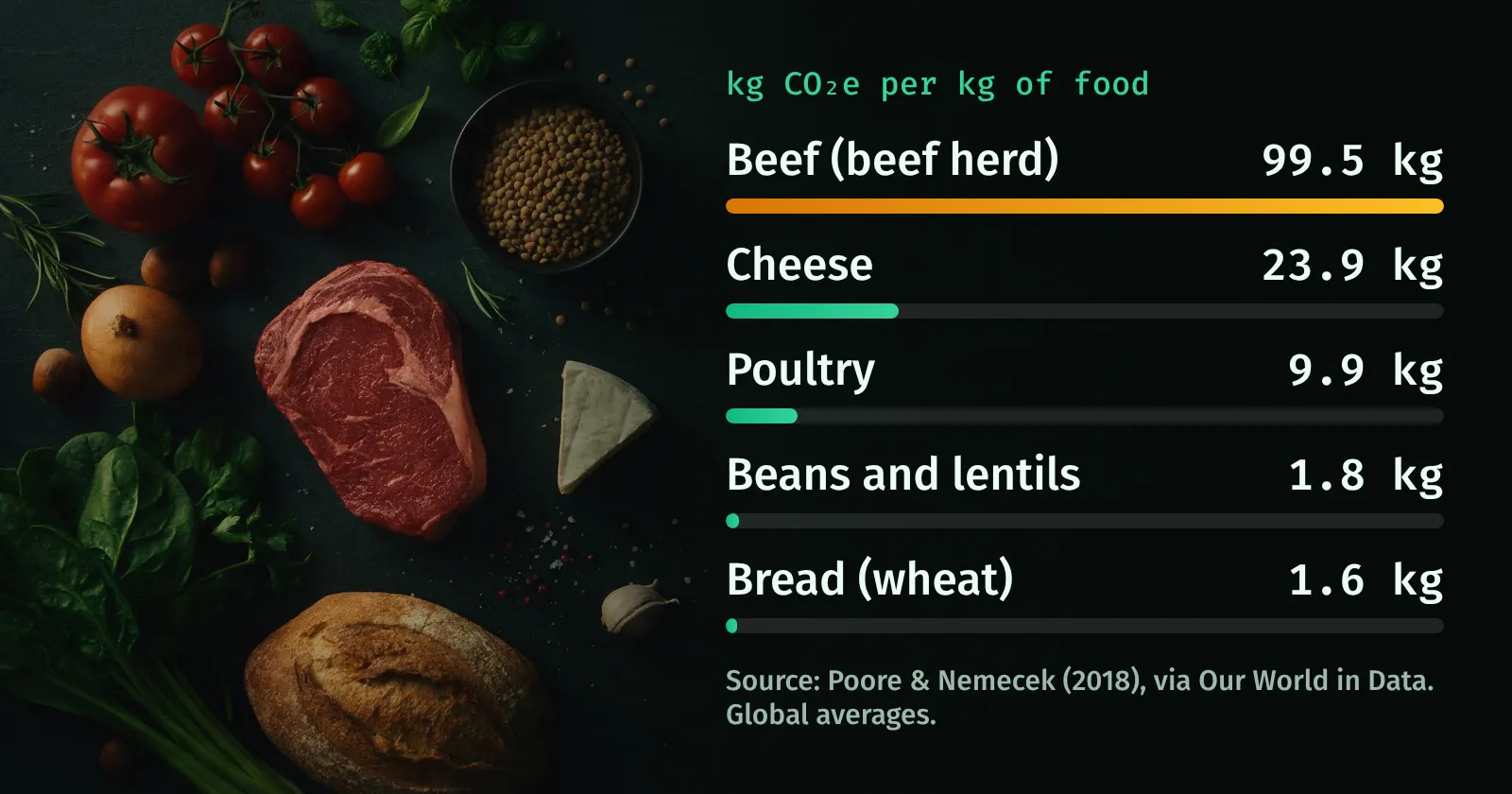 Food
Carbon footprint of food: what matters, what doesn’t, and the swaps that count
Food emissions per kg and per 100 g protein for 20 foods, how much diet changes cut, why local matters less than you think, and swaps with rough savings.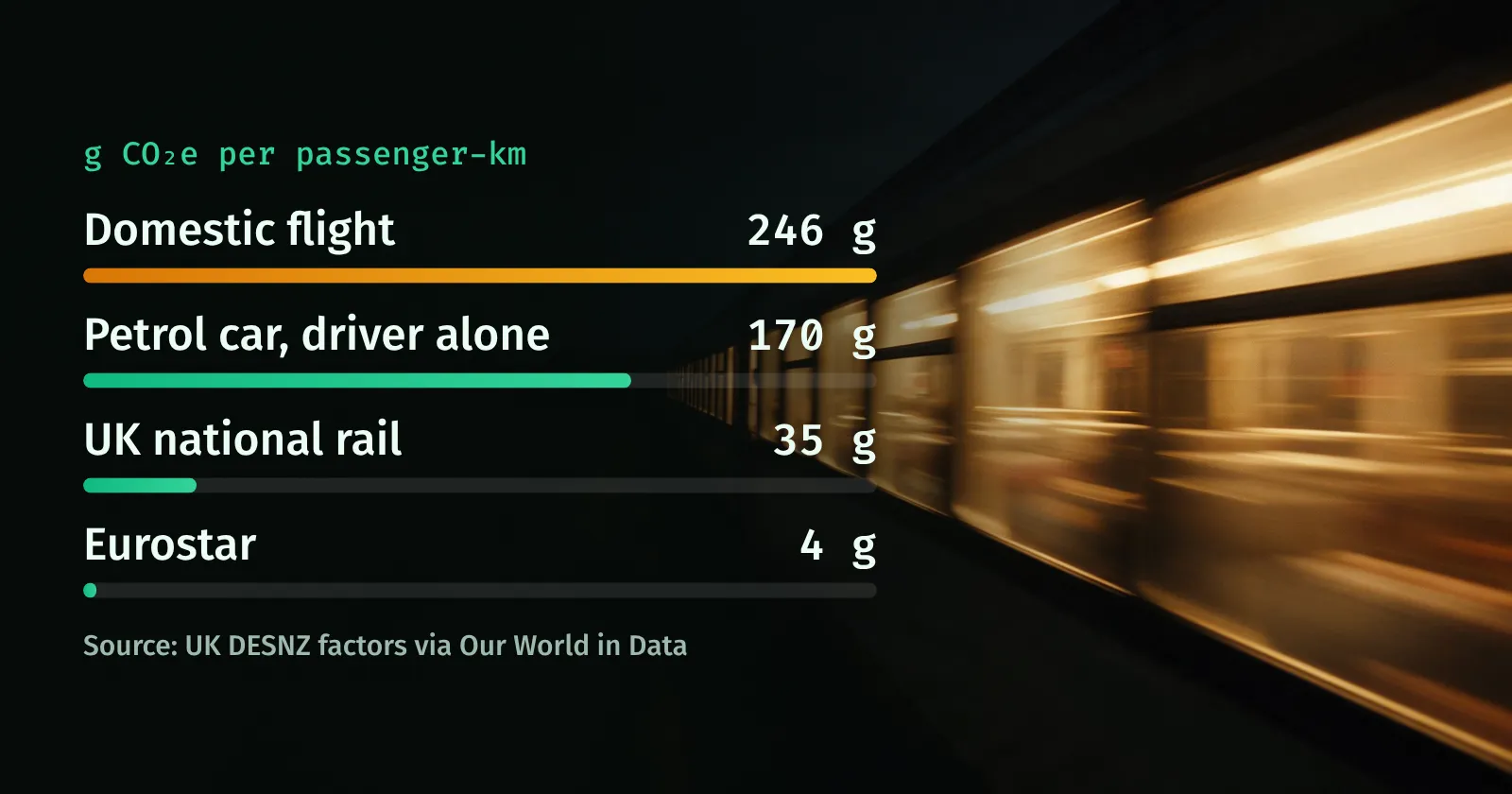 Transport
 emissions compared: cars, EVs, trains and planes
Grams of CO₂e per passenger-km for each main way to travel, EV vs petrol lifecycle emissions, how the grid changes the answer, and flying’s true impact.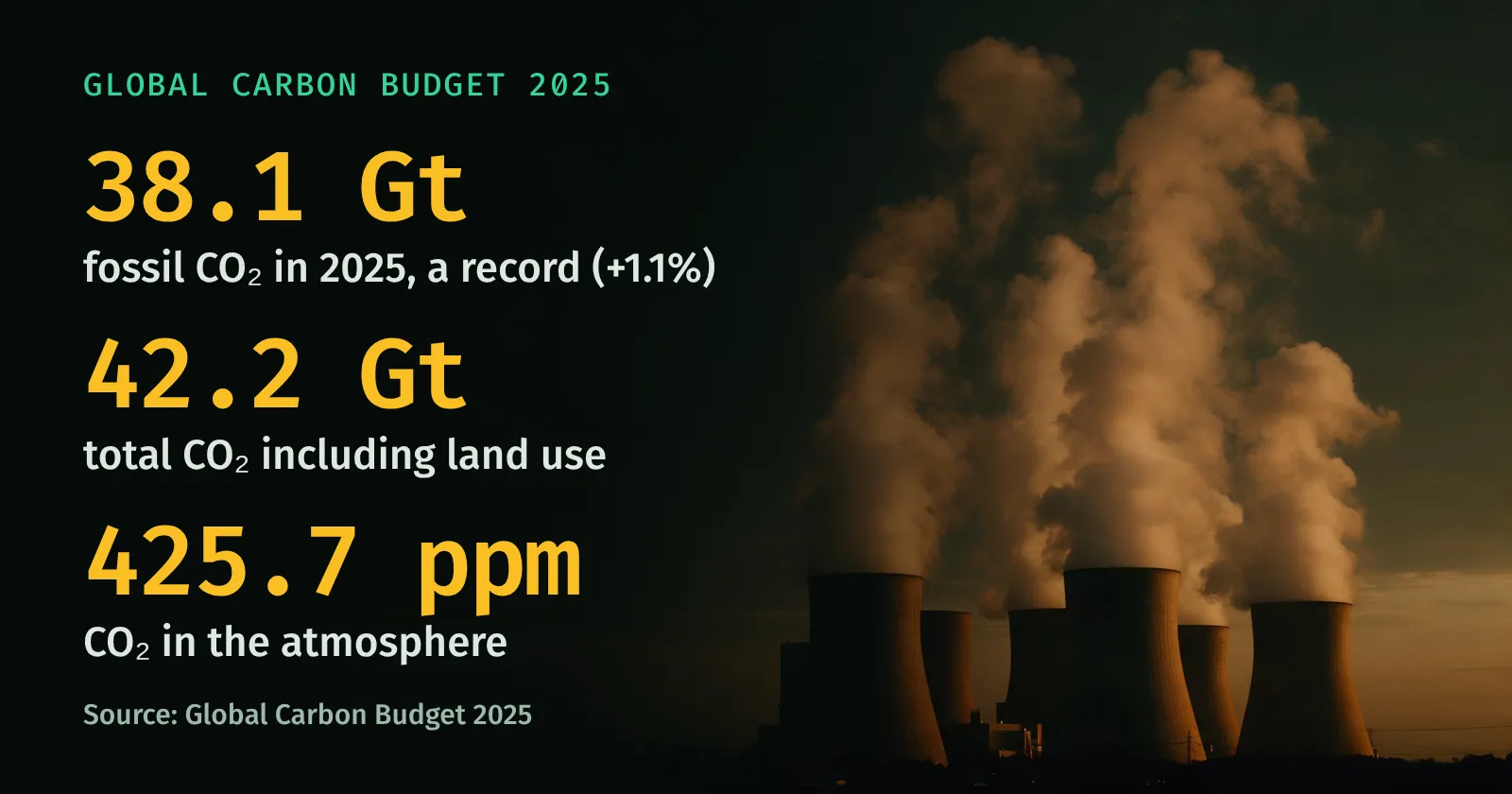 Climate science
Global Carbon Budget 2025: the key findings, explained
Global Carbon Budget 2025 in plain English: record 38.1 Gt fossil CO₂, country trends, carbon sinks, 425.7 ppm and the 170 Gt left for 1.5 °C.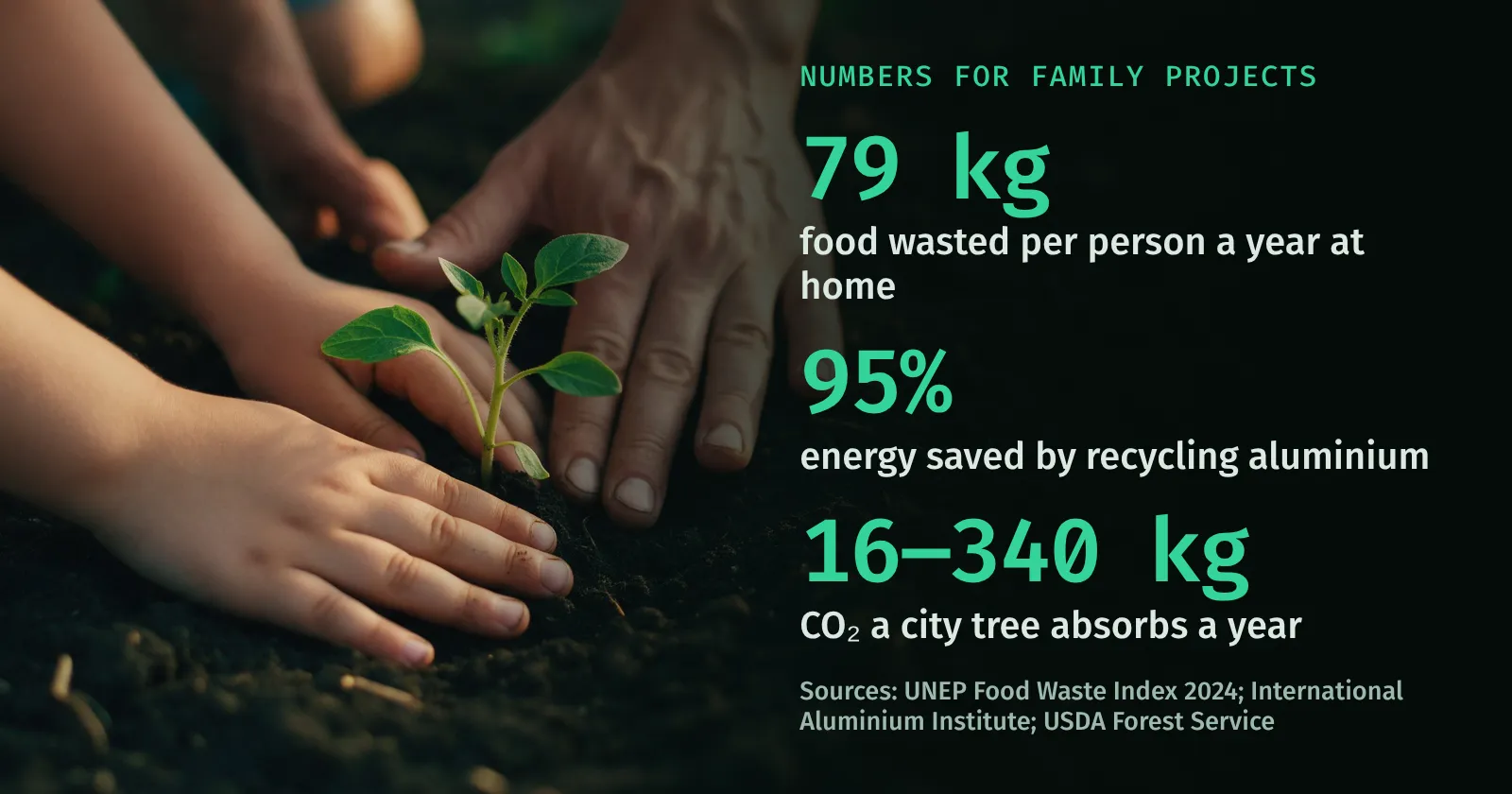 Family
Eco-friendly family activities: 20 ideas kids actually enjoy, by age and setting
20 eco-friendly activities for families, grouped by age and setting, plus an energy-detective challenge using a live CO₂ counter and real data kids can check.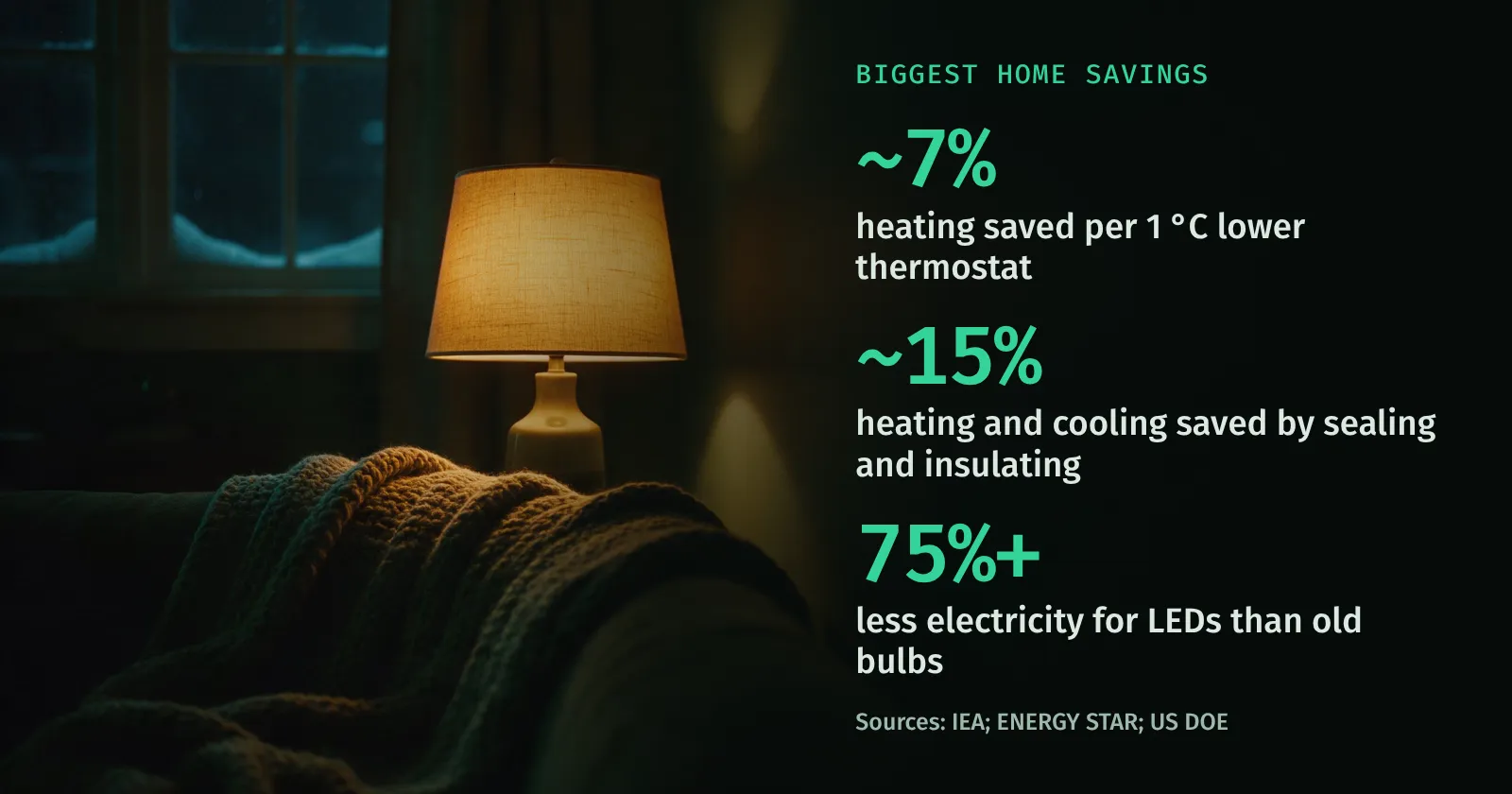 Home energy
How to save energy at home: 15 changes that cut bills and CO₂, ranked by impact
15 ways to save energy at home, ranked by impact: heating, insulation, hot water, lighting and standby, with kWh, CO₂ and bill savings from DOE, IEA and EST.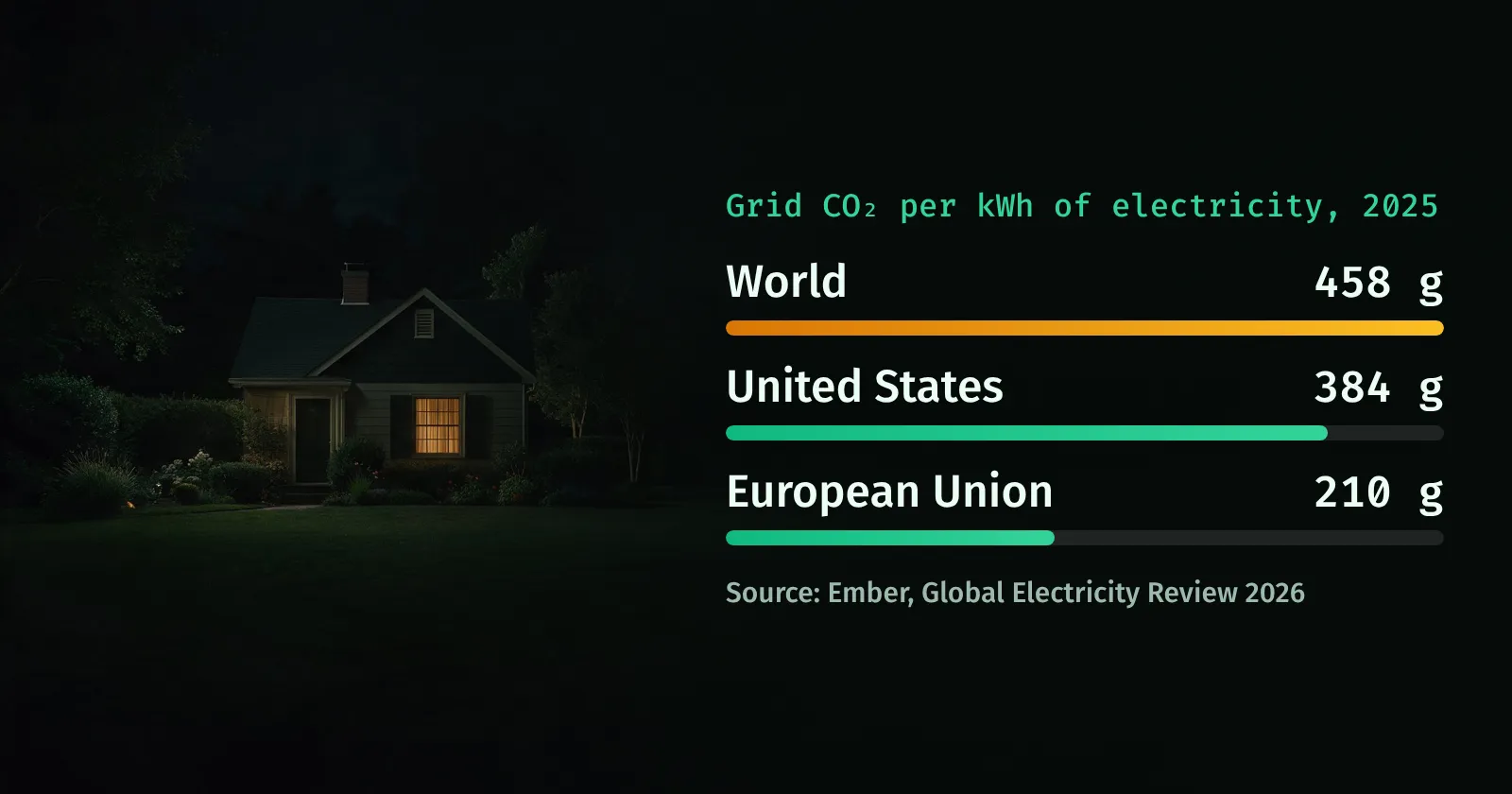 Home energy
How to track your home energy use: meters, monitors, apps and a first-week plan
Track home energy use with your meter, smart meter data, whole-home monitors and smart plugs, find your baseload and convert kWh into CO₂ with grid intensity. How-to